
Written by: Evan Delgado
Edited by: El Paso ISD Communications
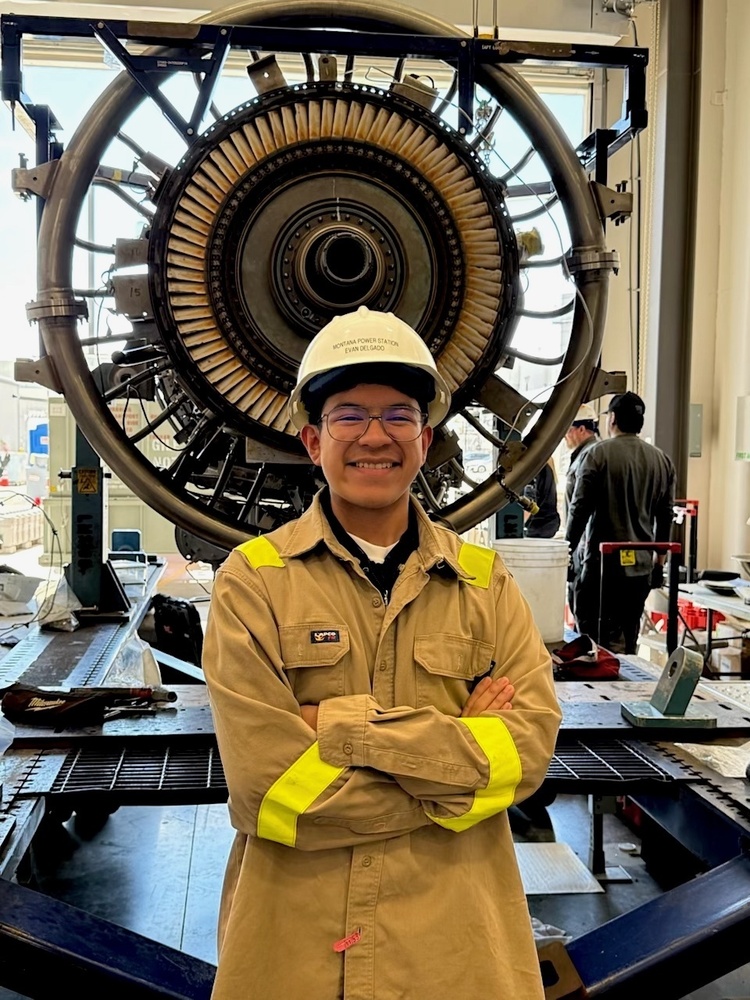
My name is Evan Delgado, and I’m currently attending Chapin High School and going into my senior year. I began my internship with El Paso Electric in June of 2026, and I have learned a lot, including how electricity is produced for the city.
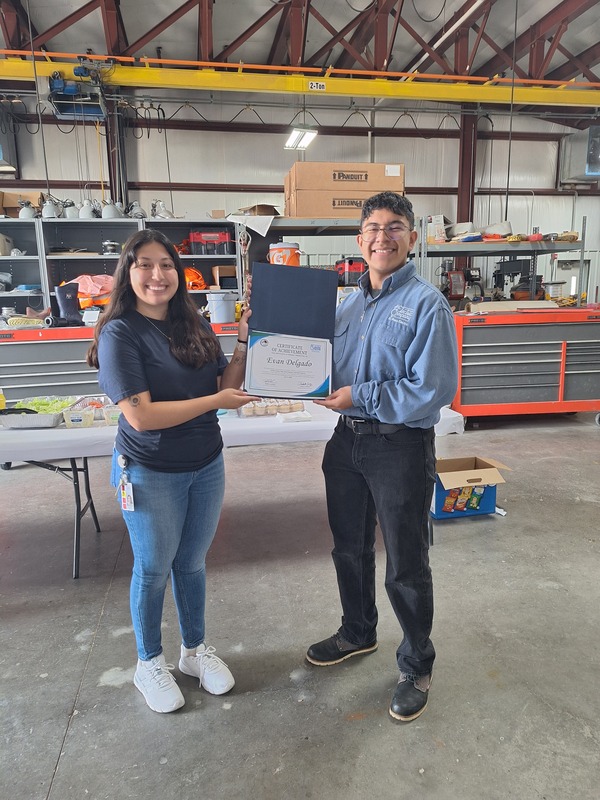 Firstly, I found this internship opportunity one day while looking through my emails. A message was sent detailing a paid internship that involved many different fields, like business, health, and, what really interested me was engineering.
There were many people who helped me through the process of getting into this program, including Rachel Milner, my counselor; Jessica Rivera, the CTE coordinator at Chapin; Julie Perez; and my parents. All of these people pointed me in the right direction to end up here at El Paso Electric. To be honest, I didn’t even know I would be coming to EPE before starting this process.
However, once I found out I would be going to EPE, I was expecting to use some of the electrical skills I learned in one of my classes at Chapin. Instead, I learned that the work is much more mechanical than I originally expected.
One of the main things I learned was how electricity is actually generated, and it can be explained simply: spinning a fan extremely fast. There is much more to it, though. The main component of electricity generation is a jet engine. It takes in air through its intake, compresses the air, mixes it with fuel, and combusts the mixture, which creates energy. That combustion spins a turbine extremely fast, which then turns a generator. The generator converts the mechanical rotational energy into electrical energy, which is then sent out to the city.
There is a lot that people don’t consider when thinking about electricity. These extremely fast rotations create high temperatures, so cooling systems using water and air are necessary. However, those cooling materials must remain clean because contaminants can damage the turbine blades. This requires filtration systems and regular maintenance. I also learned how pumps for these systems need to be maintained, including replacing and realigning couplings.
The exhaust from the jet engine also needs to be managed because it is contained within an indoor casing. The exhaust must be treated before being released, which requires additional systems, including filters and ammonia systems. Going back to the fast rotations, lubrication is also extremely important because without it, friction in the bearings could cause major damage to the equipment.
 Learning about all of these systems has opened my mind to how much work goes into providing electricity for something as simple as charging my phone or turning on the lights at night.
Overall, this has been a wonderful experience, and I hope future employers in engineering will see this opportunity as an important part of my growth and development. The people here at the Montana Power Station have made me feel at home while teaching me the importance of finding joy in your profession.
This internship was especially fitting because my dream job is to become an aerospace engineer at Lockheed Martin. Being able to see jet engines up close and learn how they work has been an incredible experience. I plan to study aerospace engineering at UTEP after graduating from Chapin, and I believe this internship will be an important stepping stone toward my future career.